

TL;DR: Mass-produced knitwear is manufactured using computerized flat-knitting machines that create individual panels (front, back, sleeves), which are then linked together, washed, finished, and decorated before quality inspection and shipment.
Bottom line: This guide is for fashion brands, retailers, and startups sourcing industrial knitwear production—not for hobbyists seeking hand-knitting tutorials.
Last updated: 2026-06-22, based on 28 years of manufacturing experience and data from 2,000+ global brand partnerships.
Key Takeaways
- Computerized flat-knitting machines (3GG–14GG gauge) automate panel production, replacing hand-knitting in commercial manufacturing.
- Six distinct stages govern the workflow: yarn winding, panel knitting, linking, washing/finishing, decoration, and quality control.
- MOQs start at 100 pieces per style/color in 2026, enabling startups to test designs without massive inventory risk.
- Lead times run 4–8 weeks from order confirmation to shipment, including yarn sourcing, machine programming, and multi-stage finishing.
- Panel knitting dominates mass production because it offers design flexibility and lower per-unit costs at volumes above 500 pieces.
From Yarn to Machine: The Foundation of Knitwear Manufacturing
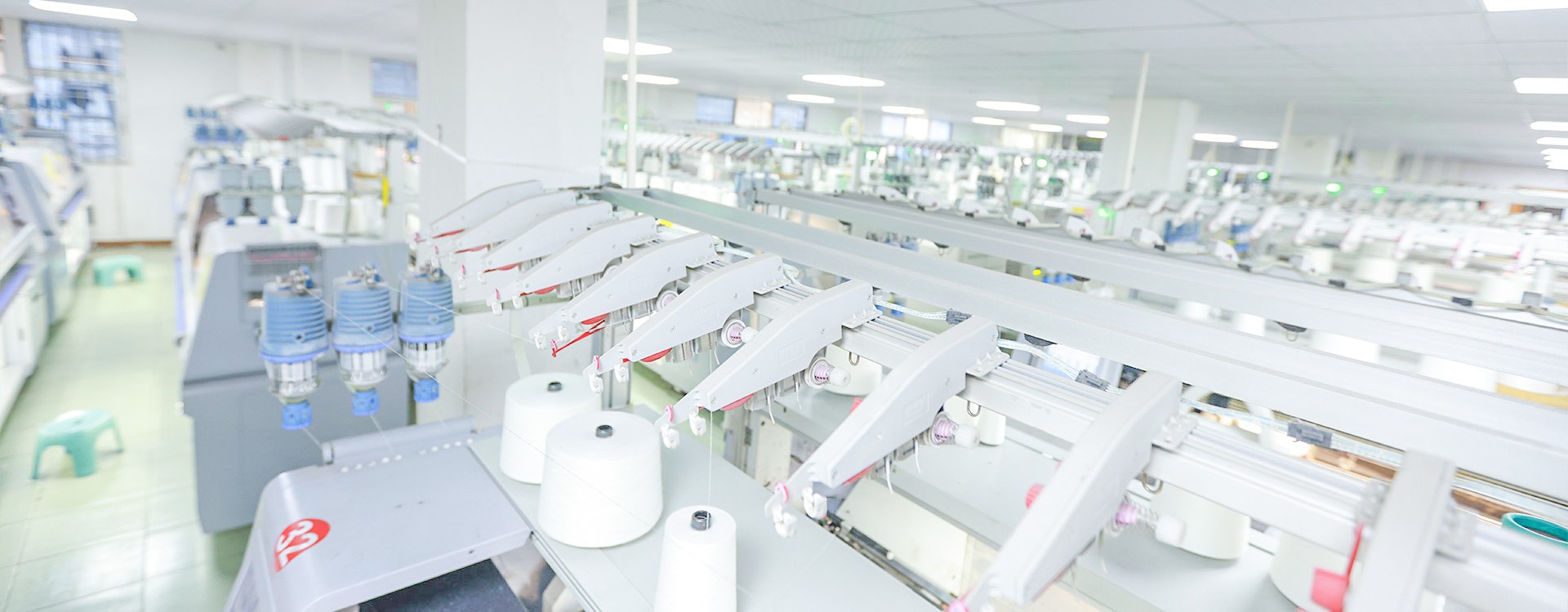
Mass production begins when a design file is programmed into a computerized knitting machine. The machine knits individual panels—front, back, and sleeves—which are then manually linked together, washed, finished, and inspected before shipment. The entire process takes 4–8 weeks and produces 80,000+ sweaters monthly at a single facility.
Hand-knitting is not economically viable for bulk orders. Even a skilled artisan requires 5–6 hours to complete one cardigan on a manual home machine, according to Fashion-Incubator’s production guide. Industrial factories use computerized flat-bed machines—Shima Seiki, Stoll, or equivalent models—that operate automatically once programmed. These machines span gauges from 3GG (chunky cable knits) to 14GG (fine merino dress weights), as documented by CottonWorks™.
Design files are converted into machine-readable programs that control needle movement, stitch structure, and shaping. A technician threads the correct yarn colors onto the machine, then the knitting process begins. Each panel—front, back, sleeve—is knitted separately. Panel knitting dominates because it allows multiple patterns to run simultaneously and accommodates design changes without retooling the entire machine.
The Six-Stage Production Workflow: From Order to Shipment
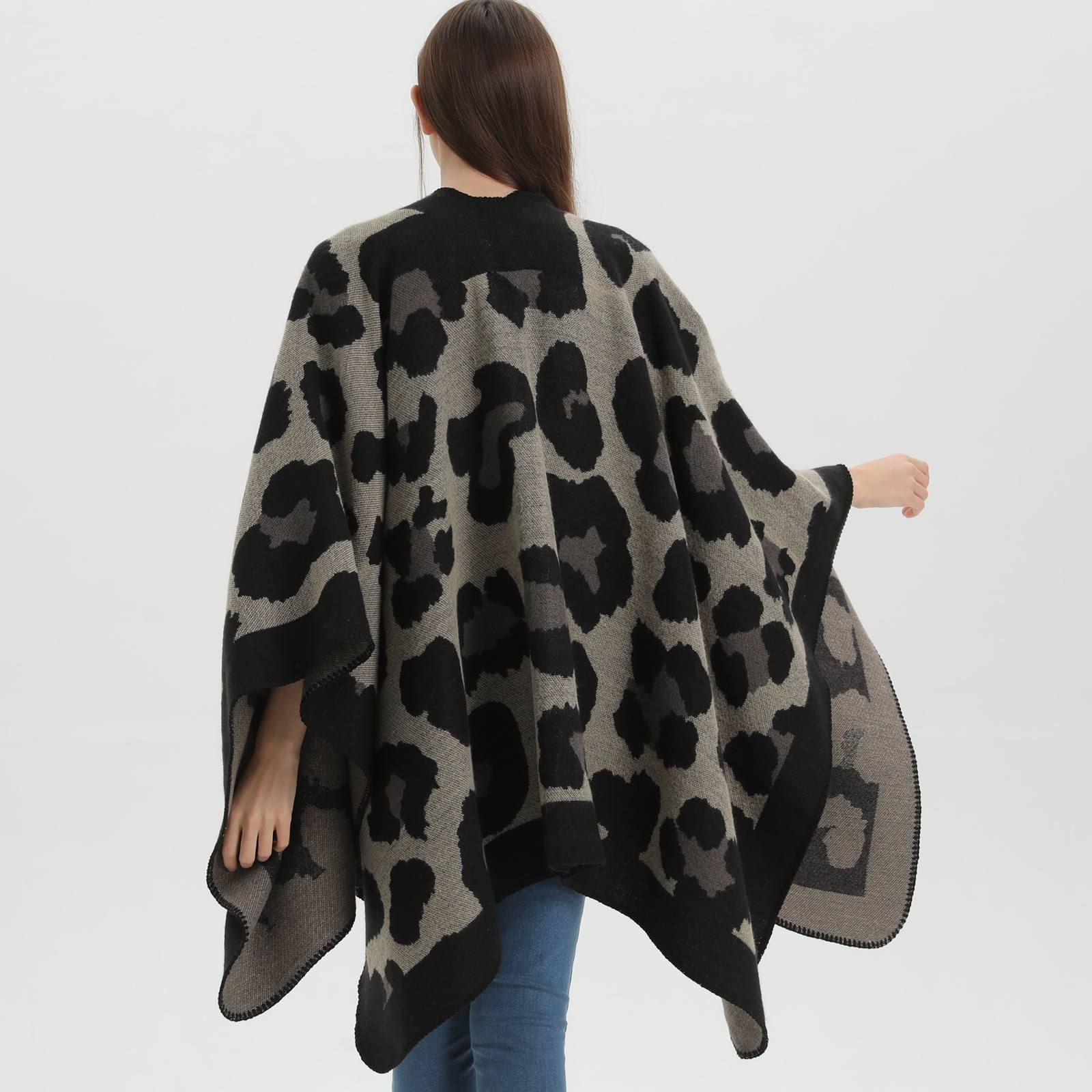
Stage 1: Yarn Preparation & Winding. Raw yarn arrives on large spools and is rewound onto smaller paper cones that fit the knitting machine. During cone-to-cone winding, a thin layer of wax is applied to reduce friction and prevent yarn breakage during high-speed knitting.
Stage 2: Panel Knitting on Flat-Bed Machines. Technicians load the design program and thread yarn colors. The machine knits front, back, and sleeve panels individually, using needle-bed movements to create shaping (armholes, necklines, sleeve caps). Each panel takes 50–90 minutes depending on gauge and complexity.
Stage 3: Linking & Assembly. Skilled linking operators use specialized looping machines to join panel edges stitch-by-stitch, creating invisible seams. Shoulders, side seams, and sleeves are linked first. Collars and cuffs are attached separately. Factories employ 200+ trained workers to maintain consistent quality.
Stage 4: Washing & Finishing. Assembled garments undergo garment washing to soften fibers, stabilize dimensions, and remove residual wax. Enzyme treatments reduce pilling. Some orders include garment dyeing or brushing/napping to raise surface fibers for a softer hand-feel. This stage takes 3–5 days including drying and pressing.
Stage 5: Decoration & Trims. Embroidery, screen printing, or heat-transfer graphics are applied. Buttons and zippers are inserted. Woven labels, hang tags, and care labels are attached. Custom branding—logo patches, leather labels, custom drawstrings—is completed here.
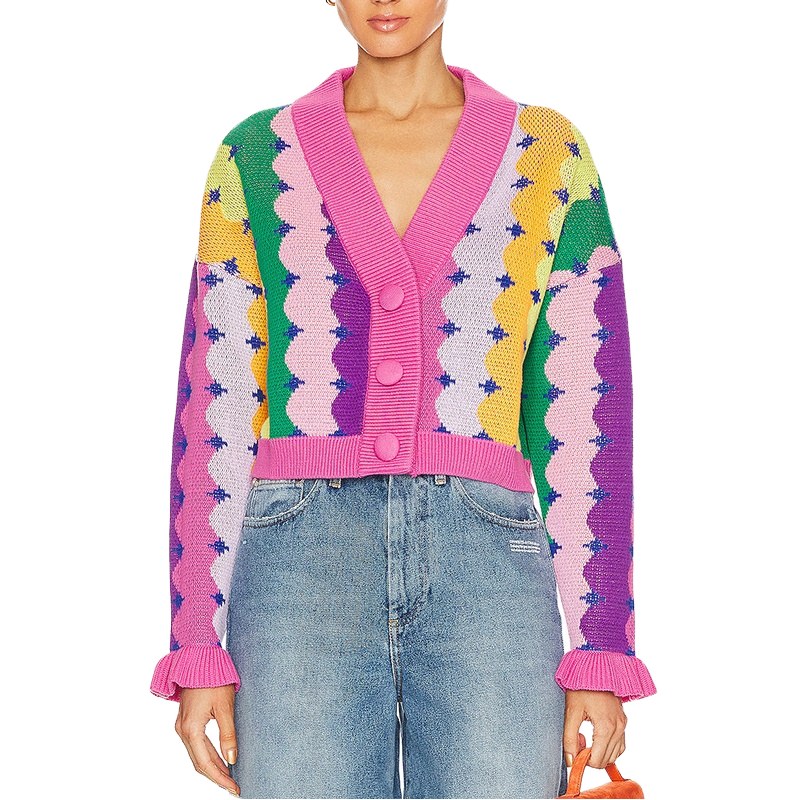
Stage 6: Quality Control & Packaging. Inspectors verify measurements against the tech pack, check seam alignment, test for pilling resistance, and inspect decoration placement. Garments are pressed, folded, and packed in polybags. Factories maintain detailed records of yarn lots, machine settings, and wash parameters to ensure batch-to-batch consistency.
Whole-Garment vs. Panel Knitting: Production Methods Compared
Modern knitwear factories choose between two fundamentally different production methods—panel knitting (faster, more versatile, labor-intensive linking) and whole-garment knitting (seamless, higher machine cost, fewer manual steps).
Direct answer: Panel knitting creates separate front, back, and sleeve pieces that are manually linked together, offering design flexibility and lower per-unit costs at scale. Whole-garment knitting produces a seamless, ready-to-wear sweater directly from the machine, eliminating linking labor but requiring specialized equipment and longer programming time. Panel knitting dominates mass production because it accommodates complex patterns, faster sampling, and volumes above 500 pieces more economically.
| Method | Machine Setup | Linking Required | Lead Time | Complexity | Cost per Unit |
|---|---|---|---|---|---|
| Panel Knitting | Standard flatbed (3GG–14GG) | Yes, extensive | 4–6 weeks | High (multiple patterns) | Lower at scale |
| Whole-Garment Knitting | Specialized computerized (Shima Seiki/Stoll) | Minimal/none | 5–8 weeks | Lower (single program) | Higher per piece |
| Hybrid (Seamless Body) | Flatbed + linking | Partial (sleeves only) | 4–6 weeks | Medium | Medium |
Panel knitting suits brands launching multiple styles per season, testing new designs, or requiring intricate intarsia and jacquard patterns. Whole-garment knitting appeals to premium labels emphasizing seamless construction and minimal waste.
Yarn Selection & Material Science in Industrial Knitting
Yarn fiber content affects knitting machine speed, tension settings, and post-wash shrinkage. Merino wool and cashmere blends suit winter cardigans (warmth, luxury), cotton and viscose blends work for spring/summer (breathability), and acrylic or recycled polyester blends serve cost-efficient mass production. Gauge (3GG–14GG) must match yarn weight—chunky yarns require coarser gauges (3GG–5GG), fine dress-weight yarns need 12GG–14GG.
Natural fibers (wool, cashmere, cotton) require lower tension and slower speeds to prevent breakage. Synthetic fibers (acrylic, polyester) tolerate higher tension and faster knitting but may pill more readily. Blends—70% merino/30% nylon, 50% cotton/50% modal—balance performance and cost.
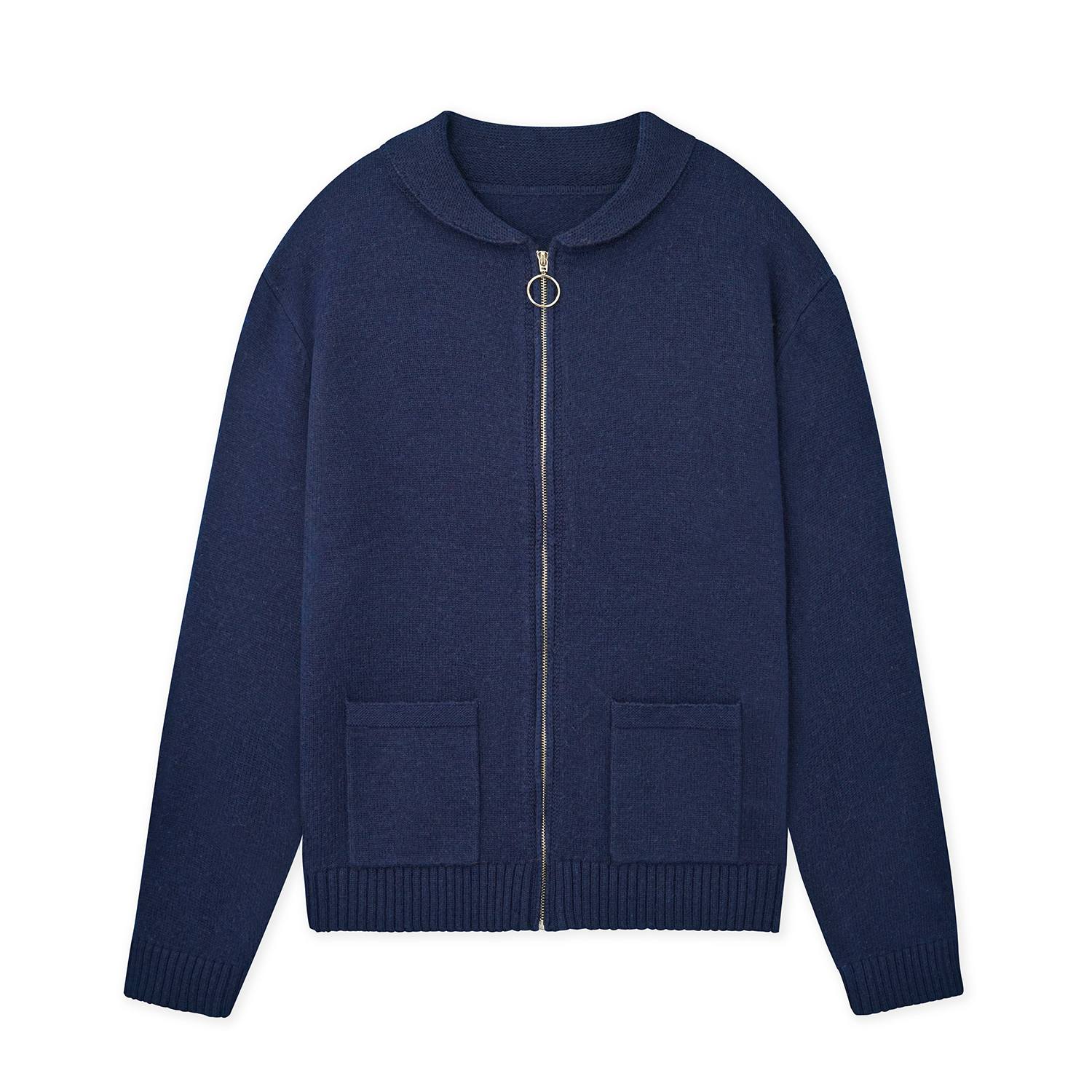
Winter collections favor merino wool (soft, warm, elastic recovery), cashmere blends (luxury hand-feel, commands 3x retail markups), or lambswool (cost-effective warmth). Spring/summer lines use cotton (breathable, washable), Pima cotton (long-staple, less pilling), or cotton-viscose blends (drape, cool hand). Sustainable brands specify GRS-certified recycled polyester, organic cotton (GOTS), or biodegradable Tencel.
Gauge matching is non-negotiable. A 3GG machine produces chunky cable knits and oversized pullovers using bulky yarn (200–300g per sweater). A 12GG machine creates fine-gauge dress sweaters and lightweight cardigans using fingering-weight yarn (150–200g per piece).
Mass-Production Knitwear by the Numbers (2026)
Global knitwear manufacturing operates at massive scale—factories produce 80,000+ sweaters monthly, MOQs start as low as 100 pieces, lead times range 4–8 weeks, and computerized machines operate at gauges from 3GG (chunky) to 14GG (fine), enabling brands to reach market faster and with lower inventory risk.
- 80,000+ sweaters per month — capacity of a mid-scale industrial knitwear factory serving global brands (CENWILD and peer Dongguan manufacturers, 2026).
- 100-piece MOQ — industry standard for low-MOQ private-label and OEM production, enabling startups to test designs without massive inventory commitment (Dongguan knitwear cluster, 2024–2026).
- 4–8 week lead times — standard duration from order confirmation through quality control and shipment, including yarn sourcing, machine programming, knitting, linking, washing, and decoration (Knitwise production guide, 2025).
- 3GG–14GG gauge range — computerized knitting machine specifications covering chunky cable knits (3GG) to fine merino dress weights (14GG), as documented by CottonWorks™ in 2024.
- 200+ skilled workers per factory — typical staffing for a full-service OEM/ODM knitwear manufacturer in Dongguan, including knitting operators, linking technicians, washing specialists, and quality inspectors (CENWILD, 2026).
- 2,000+ global brand clients — number of fashion brands served by leading Dongguan knitwear manufacturers, spanning the US, Canada, UK, Germany, Australia, Russia, UAE, and Southeast Asia (CENWILD, 2026).
FAQ
Q1: How long does it take to produce a mass-run cardigan from order to shipment?
Typical lead time is 4–8 weeks, including yarn sourcing, machine programming, knitting, linking, washing, decoration, and quality control. Rush orders compress this to 3–4 weeks at a premium.
Q2: What’s the difference between computerized knitting and hand-knitting in mass production?
Mass production uses computerized flatbed knitting machines (Shima Seiki, Stoll, or equivalent) that operate automatically once programmed. Hand-knitting takes 5–6 hours per cardigan and is not economical for bulk orders.
Q3: Can I order just 100 sweaters, or is there a higher minimum?
Many modern manufacturers, including CENWILD, offer MOQs starting at 100 pieces per style/color. Larger orders (500+) typically receive better per-unit pricing due to economies of scale.
Q4: What yarn should I choose for my cardigan line?
Winter cardigans favor merino wool, cashmere blends, or lambswool. Spring/summer suits cotton, Pima cotton, or cotton-viscose blends. Budget-conscious lines use acrylic or acrylic blends. Sustainable brands specify recycled polyester or GRS-certified yarns.
Q5: How do factories ensure quality consistency across thousands of sweaters?
Quality control happens at multiple stages: incoming yarn inspection, in-line machine monitoring during knitting, measurement verification post-linking, pilling and shrinkage tests post-washing, seam and stitch inspection, and final visual checks before packaging.
Sources
- CottonWorks™ — Sweater Manufacturing Basics — Cotton Incorporated, 2024 — gauge specifications and whole-garment knitting methods.
- Knitwise — Custom Knitwear Production Time — 2025 — lead-time breakdown and jacquard knitting process.
- Fashion-Incubator — Sweater Design and Production — 2024 — hand-knitting timelines and home-machine operation.
- iMily Clothing — Sweater Manufacturing Process Guide — 2026 — order confirmation, yarn sourcing, and bulk production workflow.
- Donggual CENWILD Clothing Co., Ltd. — Knitwear Manufacturing Partner, 2026 — [email protected] | +86 137 1325 2727 — 28-year manufacturing experience, 80,000+ monthly capacity, 2,000+ global brand clients.
Written by Alin Zeng (Premium Streetwear Knitwear, 28-Year Master Craftsmanship, One-Stop Custom Manufacturing, High-End OEM/ODM Solutions, Cost-Effective Global Delivery). Last reviewed 2026-06-22.